
Stabilizing a Factory with a
Weekly Planning Rhythm
Our client had a problem they couldn't quite name.
The factory was running.
Orders were going out.
Customers were being served.
But something on the floor never felt right.
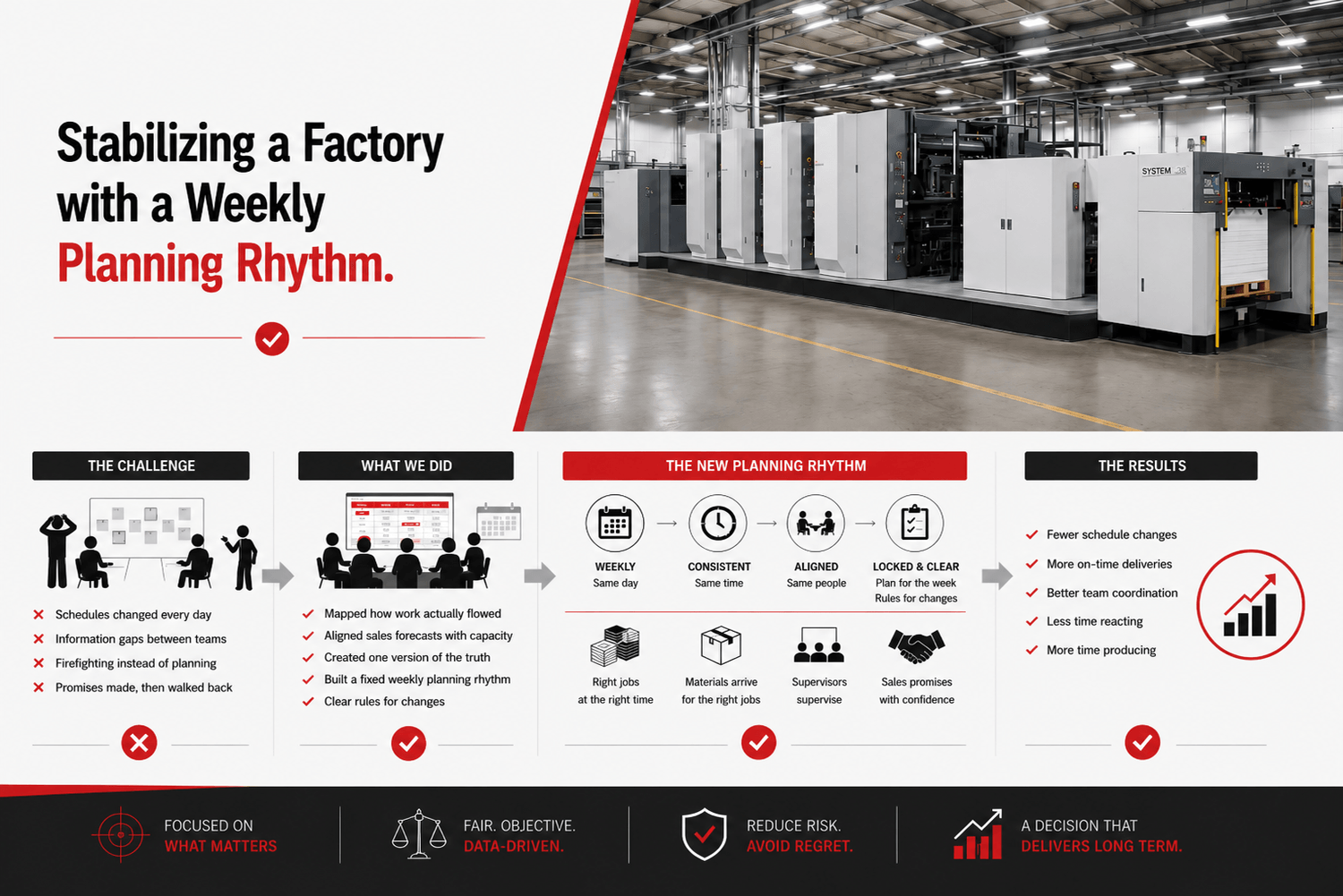
Schedules changed every day, sometimes more than once. Operators would start a job in the morning and be told to switch by lunch. Materials arrived for batches that had already been bumped. Supervisors spent more time updating boards than supervising work.
Sales had its own version of the same problem.
Customers were being told one delivery date, then asked to wait. Promises made on Monday were being walked back by Friday. Nobody was lying. Nobody was being careless. The information just wasn't getting from one team to the other in time.
Production didn't really know what sales was selling. Sales didn't really know what production could do. Both teams were doing their best, separately, and the result was a schedule that kept moving.
This is one of the most common problems we see in factories that are otherwise running well. The machines work. The people work. The orders are real. But the planning is reactive. Every day starts with a fix instead of a plan.
When we came in, we didn't change the products. We didn't change the machines. We didn't even change the people.
We changed how they planned.
The first thing we did was study how the work actually flowed. How orders came in. How sales handled them. How production found out about them. How long each step took. Where the gaps were. What information was missing, and when. A few things stood out. Sales forecasts and production capacity weren't being looked at side by side. There was no fixed rhythm to planning. Everyone was working from a slightly different version of the truth.
So we built one version of the truth, and a rhythm to run it on.
We put together a planning system that matched their business. Sales forecasts and production capacity were brought into the same conversation. We set a fixed planning rhythm. Weekly. Same day. Same time. Same people in the room. The plan was locked in for the week, and any changes after that were handled with clear rules instead of corridor conversations.
In the first few weeks, it felt slower. That's normal. Teams that are used to firefighting often miss the adrenaline of it. But the chaos started to drop. Last-minute changes went down. Materials started arriving for the jobs that were actually being run. Supervisors had time to supervise. Sales had a clearer picture of what they could promise, and when.
Over the next few months, the numbers told the story. Fewer schedule changes. More on-time deliveries. Better coordination between teams. Less time spent reacting and more time spent producing.
The factory hadn't changed. Same building, same machines, same people. What had changed was the way they ran it.
They had moved from reacting to a schedule they didn't really control, to running a schedule they did.
The factory isn't bigger or faster than it was before. It just isn't fighting itself anymore. In most cases, that's all it really takes.